


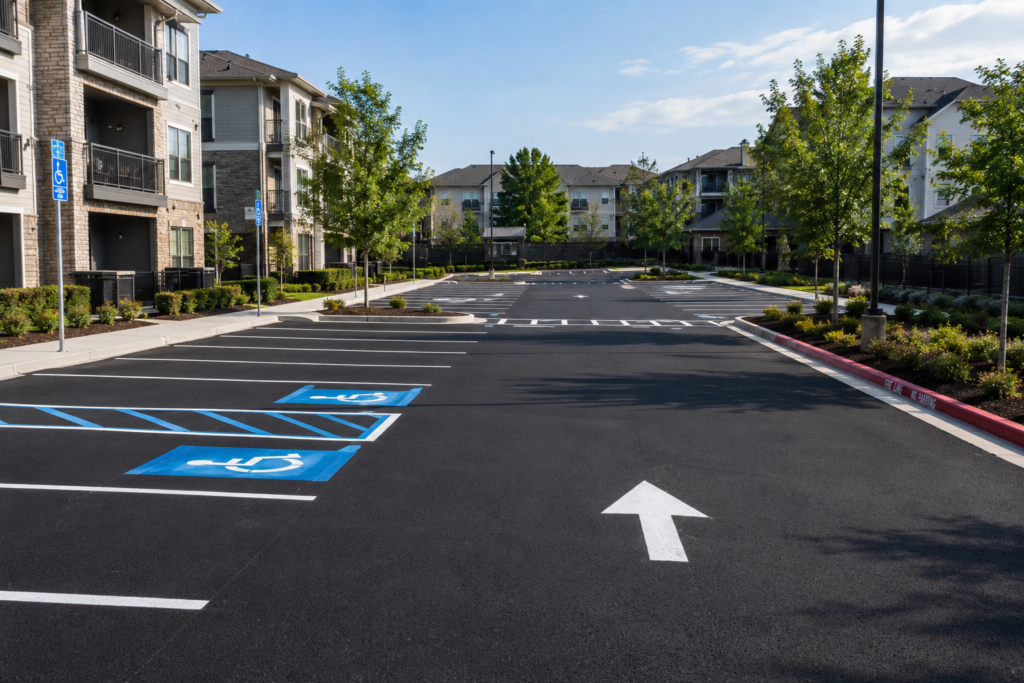

Parking lot markings help organize traffic, define parking spaces, support pedestrian movement, and shape the appearance of a multifamily community. Sun exposure, vehicle traffic, weather, and pavement wear can cause painted lines to fade over time. August can provide a useful project window for restoring these markings before fall schedules and changing weather conditions affect the work. A planned restriping scope can improve property presentation while making the parking area easier for residents, guests, vendors, and staff to navigate.
Take Advantage of Warm Pavement Conditions
Striping paint requires the right surface and weather conditions for application. The pavement should be clean and dry, with temperatures that support proper adhesion and curing. August often provides warm pavement and longer periods of daylight in many markets. These conditions can help crews complete the work within planned closure periods. Property teams should still review the local forecast, surface temperature, humidity, and product requirements before scheduling. Rain, overnight moisture, or extreme heat may affect when each section can be painted and reopened.
Refresh Property Presentation Before Fall
The parking lot is one of the first areas residents and prospects see when they arrive at a community. Faded stall lines, worn arrows, and unclear curb markings can make the property look unfinished even when the surrounding buildings and landscaping are maintained. Fresh striping creates contrast against the pavement and gives the lot a cleaner, more organized appearance. Completing the work in August can prepare the property for fall leasing activity, resident events, ownership visits, inspections, and other seasonal priorities.
Reestablish Parking and Traffic Patterns
Restriping can do more than repaint existing parking spaces. It gives property teams an opportunity to review how vehicles and pedestrians currently move through the site. Directional arrows, stop bars, crosswalks, loading zones, visitor spaces, reserved parking, and fire lanes should support the way the property operates. Changes in building use, delivery activity, resident traffic, or amenity access may have created needs that were not part of the original layout. The project scope should identify which markings need to remain, which need to change, and whether any old markings should be removed. Reviewing the full layout before painting begins can prevent conflicting lines and unclear traffic patterns.
Review Accessible Parking Areas
Accessible parking spaces and access aisles are important parts of the parking lot plan. Paint, signs, slopes, routes, and pavement conditions should be reviewed together when the area is evaluated. Faded markings may make spaces or access aisles difficult to identify. Pavement repairs, drainage concerns, damaged signs, or changes to the route between the parking area and building entrance may also affect the project scope. Property teams should confirm applicable accessibility requirements before changing the number, size, placement, or configuration of accessible spaces. Restriping should reflect the approved layout rather than relying only on the location of existing faded lines.
Complete Pavement Work Before Restriping
New paint should be one of the final steps in a parking lot improvement project. Asphalt repairs, crack filling, sealcoating, concrete work, drainage improvements, and other surface treatments may disturb or cover new markings. Completing these scopes first can protect the finished striping and reduce the need to repaint recently completed areas. The pavement should also be given the appropriate time to cure before striping begins. August can serve as a useful point in the project schedule for completing final markings after earlier pavement repairs or sealcoating work. Coordinating the scopes within one plan can create a more consistent finished result.
Plan the Work in Phases
Restriping an occupied multifamily property requires a plan for resident vehicles and daily operations. The full parking lot may not be available for closure at one time. Crews can divide the work by building, parking row, drive lane, or property section. Each phase should account for vehicle relocation, temporary parking, leasing traffic, deliveries, trash collection, emergency access, and the time needed for the paint to dry. Resident communication should explain which areas will close, when vehicles need to move, where temporary parking is available, and when each section is expected to reopen. Clear notices and site signage can help prevent vehicles from entering active work areas.
Include Supporting Site Work
Parking lot restriping may connect with curb painting, signage replacement, wheel stop installation, traffic signs, speed bumps, lighting, and pedestrian route improvements. Addressing these items as part of the same project can make the completed parking area feel more consistent. The scope should reflect the property’s current operations, site conditions, and long-term plans. A detailed layout, phased schedule, and communication plan can help property teams complete the work while maintaining access across the community.