


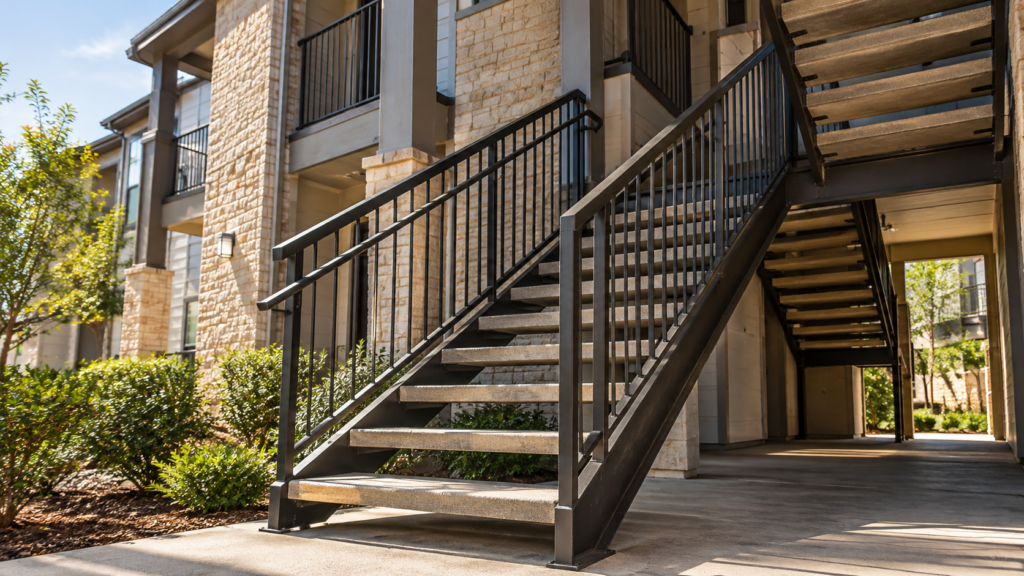

A creak from an apartment stairway can draw attention, but sound alone does not establish whether a staircase is safe or damaged. At multifamily communities, exterior stairs face constant foot traffic, rain, temperature changes, and exposure to the elements. Wear may appear on the steps or landings, while other concerns can develop in the framing, supports, and connections beneath them. Understanding the condition of the full stairway helps owners and property teams plan the right repair or replacement scope.
Look Beyond the Creak
Movement, cracked treads, rust, deteriorated concrete, and loose railings can point to conditions that deserve closer review. A noisy stairway does not always require replacement, and a quiet stairway is not proof that the structure is sound. When a staircase shows damage or instability, a qualified professional should evaluate its condition and determine whether access restrictions are needed before work begins.
Review the Structure Beneath the Steps
The visible walking surface is only part of a stairway. Depending on the construction, stringers, steel members, wood framing, welds, anchors, and connections to the building may support the steps and landings. Moisture exposure and corrosion can affect these components, including areas that are difficult to see during a routine property walk. A thorough review can identify which sections need repair, replacement, or further structural evaluation.
Determine Whether to Repair or Replace
Some stairway projects call for targeted repairs, such as replacing individual treads, damaged steel members, failed connections, or sections of a landing. Other conditions may require a more extensive rebuild or full replacement of the stair run. The choice depends on the extent of the damage, the condition of the supporting structure, and applicable design requirements. Establishing this scope before construction helps limit unforeseen changes after demolition begins.
Include Treads, Landings, and Drainage
Worn treads and deteriorated landings affect both the appearance and use of exterior stairways. Depending on the existing system, renovation work may include new stair treads, concrete step replacement, landing repairs, surface finishes, or reconstruction of affected sections. Water that collects on steps or near support points can contribute to deterioration, so the project design should also review drainage and how the completed surfaces will shed water.
Address Handrails, Guardrails, and Connections
Stairway renovations should consider the elements residents depend on when moving between levels. Damaged handrails, corroded guardrails, loose posts, and failing attachment points may need repair or replacement alongside the stair structure. New components should be designed and installed to meet the project’s applicable code and structural requirements. Reviewing these items as a connected scope can help avoid replacing finished surfaces to reach a missed connection.
Plan Repairs Around Resident Access
Exterior stairs are often part of a resident’s primary route to an apartment. Repairs and replacements may require temporary closures, material staging, demolition, welding, concrete work, and inspections. Property teams need a construction sequence that accounts for building access, resident notices, deliveries, and emergency egress. Alternate routes and closure plans should be confirmed before work restricts access to an occupied building.
Plan Your Stairway Project With Matrix
Matrix Construction Services works with multifamily owners and property management teams on exterior stairway repairs and replacements at occupied communities. From concrete steps and landings to steel components, framing, railings, and related exterior work, our team can help develop the scope and coordinate construction around property operations. If stairway damage is raising questions at your community, contact Matrix to discuss the next project.