


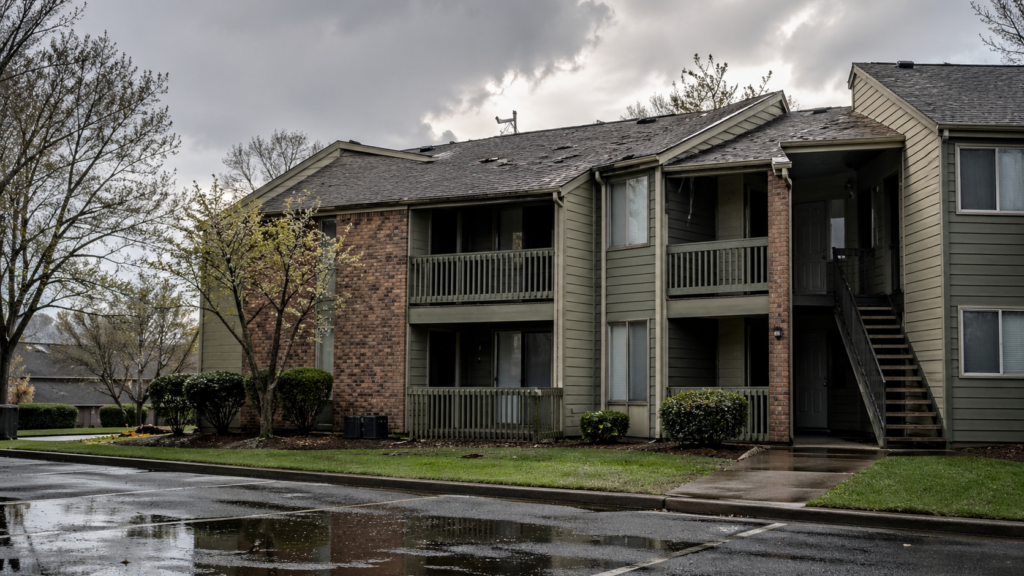

Going into May means entering what can usually be a strong leasing season for multifamily properties. It also unfortunately tends to bring weather conditions that test the condition of the buildings, site, and exterior systems. On-site property teams will need a plan before this severe weather season causes hazards for residents and begins to affect the property financially. That planning begins with knowing where damage is most likely to occur and being able to address it effectively.
Roof Damage After Spring Storms
Roof damage is one of the most common concerns after spring storms, and understandably so. It can bring hail that can impact roof surfaces, wind that can lift materials or expose weak areas, and pouring rain that can cause major leaks. And it can spread across the entire property. A single leak can reach ceilings, walls, insulation, and interior finishes. That creates disruption for residents and can expand the repair scope way beyond what your properties can afford to take care of. Now is a good time to review roof conditions and document areas that show storm damage, even if just a little.
Exterior Wear From Wind and Rain
The exterior of your property takes on much of the stress during spring weather. Paint can peel, sealants can crack, and wooden components can soften from moisture exposure, or worse, they can begin to rot if unmaintained. This matters because as the exterior of your property is worn down, it affects the financial viability. Prospects will notice weathered buildings. Residents will notice damage that makes the community feel neglected. Managers especially will notice when small repairs begin turning into repeat work orders. Exterior reviews after major weather events help property teams understand what needs repair before the next storm adds more wear.
Balcony, Stair, and Railing Damage
Spring weather season can also make existing safety concerns more visible. Balconies, stair systems, landings, and railings face constant exposure to rain and temperature shifts. When these areas begin to show damage, that’s the sign to immediately take care of it before becoming an issue for tenants, which becomes a worse issue for managers. These can be loose railings, weakened surfaces, and worn stair components. These areas should be treated as a priority during spring property reviews because they connect to safety, resident use, and long-term financial performance.
Drainage and Site Conditions
As we have mentioned earlier, pouring rain can expose site issues around the property quickly and subtly. A good way to find these issues is to look for standing water near buildings, which usually points to drainage problems. Damaged concrete can end up becoming trip hazards if left alone. Worn pavement just looks bad and can make parking areas feel dated; the longer they’re not dealt with, the more difficult they become to fix later. Clean access points, stable walking surfaces, and maintained parking areas all support the impression of the property as well as the overall value of the asset. Site conditions should be part of spring review conversations, not an afterthought once larger building repairs begin.
Who To Call?
We know a thing or two about how to recognize and fix these issues that will leave you feeling secure about your assets. If bad weather has revealed damage to your property, we can help support repair work that protects the assets and its value. Call Matrix today for any property needs!