


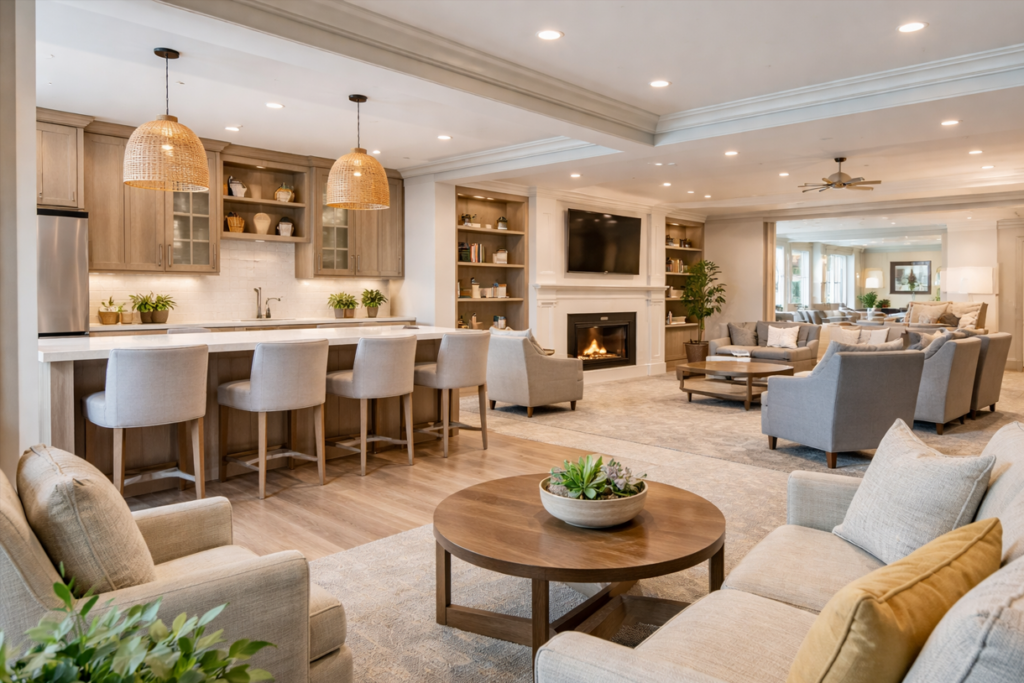

Through 2026 Senior Living occupancy is expected to rise while new supply remains limited, and capital is gradually returning to the sector. With fewer new communities coming online in the near term, existing properties are playing a larger role in meeting demand. That shift places more emphasis on how well current assets are positioned to perform.
As competition tightens, many operators are focusing on improving existing spaces rather than pursuing new development.
Higher Occupancy Increases the Need for Interior Improvements
Senior housing occupancy increased consistently throughout 2025 across both independent and assisted living communities. At the same time, inventory growth remained historically low. More residents are moving into existing communities, increasing the daily use of units and shared spaces.
As occupancy rises, the condition of interiors becomes more visible. Unit turns, flooring, walls, cabinetry, and common areas must support higher use while remaining consistent across the property. Renovation and installation work allows communities to address these needs in a planned and controlled way.
Renovation Becomes the Primary Way to Stay Competitive
With development timelines stretching several years, most near term demand will be absorbed by existing senior living communities. Rather than relying on new construction, operators are investing in interior renovations that help properties remain competitive and functional.
Unit renovations, flooring installations, drywall replacement, cabinetry installation, and interior finish upgrades help extend the usefulness of existing buildings while aligning spaces with current expectations. These projects can be phased and scheduled around occupancy to support ongoing operations.
Matrix supports senior living communities by completing renovation and installation work efficiently and consistently, helping properties improve interiors without unnecessary disruption.
Asset Condition Matters More in a Selective Capital Market
Financing conditions improved in 2025, but capital remains selective. Lenders and investors are closely evaluating asset quality, execution plans, and how well properties are positioned for long term use.
Completed renovations and well executed interior installations strengthen a property’s profile by reducing deferred upgrades and demonstrating investment in the asset. In a market where underwriting is detail driven, interior condition can directly support confidence in the property.
Interior Updates Support Evolving Resident Expectations
Many senior living communities were built decades ago, and interior updates are increasingly important as resident expectations continue to change. While layouts may remain the same, renovated interiors help communities stay relevant without requiring full redevelopment.
Refreshing units, updating common areas, and installing new interior finishes help properties better meet resident expectations while supporting leasing and retention. These updates allow communities to respond to demand without overextending scope.
Matrix works with operators to deliver renovation and installation projects that restore interiors to a clean, consistent, and functional standard.
Positioning Communities for Continued Performance
The outlook for senior living in 2026 remains positive, but success favors communities that execute well. With demand rising and supply constrained, existing properties have an opportunity to perform if interiors and shared spaces are ready.
Renovation and installation projects play a central role in that readiness. By improving interiors and completing work efficiently, communities can support occupancy, protect asset value, and stay competitive.
Matrix helps senior living and multifamily operators prepare their communities for the year ahead through reliable renovation and installation services focused on long term performance.