

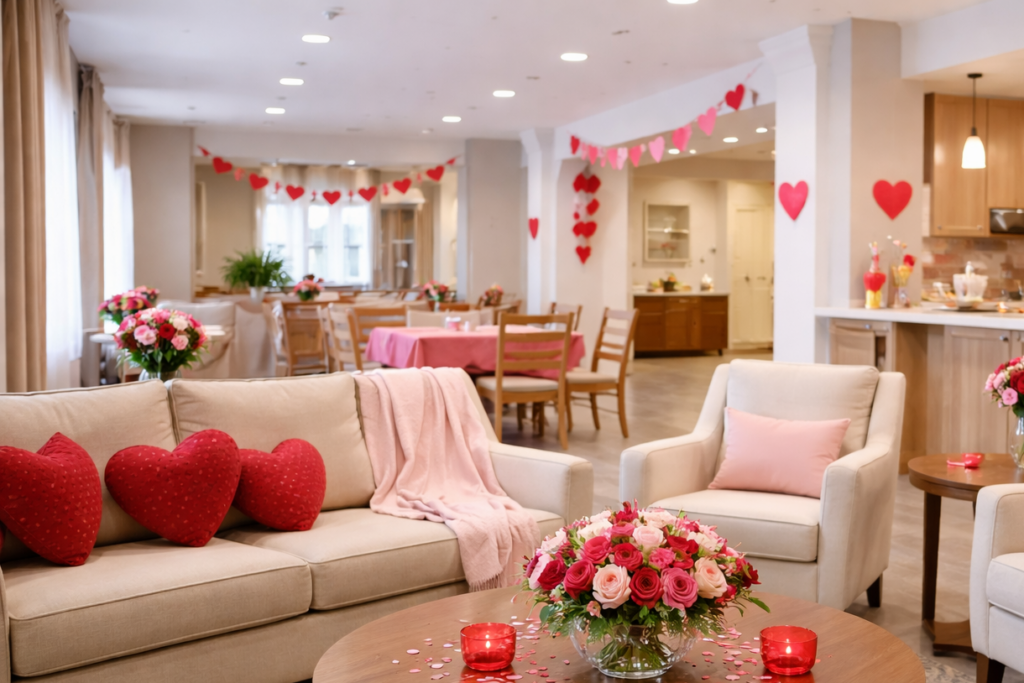

Valentine’s Day brings increased activity to assisted living communities. Family visits, group events, and shared dining experiences create short-term demands on interior spaces. For assisted living property managers and senior housing operators, preparing common areas and resident units in advance helps maintain safety, accessibility, and operational continuity.
Proactive interior planning supports resident mobility, protects finishes, and reduces disruption during higher-traffic events.
Preparing Common Areas for Gatherings
Community rooms, dining spaces, lounges, and activity areas typically see the greatest impact during holiday events. Furniture layouts should be reviewed to ensure clear walking paths and avoid congestion near entrances, restrooms, and seating clusters. Any unnecessary pieces should be temporarily removed to create wider circulation routes.
Floors should be cleaned and inspected for loose transitions, worn thresholds, or uneven surfaces. In assisted living environments, even minor flooring irregularities can increase fall risk when foot traffic rises.
Lighting and Visibility Adjustments
Lighting plays a critical role in senior housing safety. Decorations, floral arrangements, and temporary event setups can unintentionally reduce visibility in corners or along walkways.
Before Valentine’s Day events, property teams should:
- Replace dim or burned-out bulbs
- Confirm consistent lighting levels across seating and walking areas
- Check illumination near entry doors and restroom access points
Maintaining even light distribution helps residents move confidently through shared spaces.
Managing Flooring and Walking Paths
Interior flooring systems should be evaluated before seasonal gatherings. Loose rugs should be removed, and carpet edges or transitions secured. Walking paths between seating areas, entrances, and restrooms should remain unobstructed to support mobility devices and visiting guests.
When flooring conditions are addressed proactively, assisted living communities can reduce trip hazards while maintaining a welcoming environment.
Supporting Resident Apartment Visits
Many Valentine’s Day celebrations take place within resident apartments. Entry doors, hardware, and thresholds should operate smoothly to accommodate visitors and mobility aids. Interior lighting in living areas and entryways should also be checked to ensure adequate visibility.
Inside units, small furniture or décor near entry paths should be repositioned to allow clear movement. These adjustments support both accessibility and comfort during family visits.
Installing Seasonal Decorations Responsibly
Valentine’s Day décor should enhance common areas without interfering with daily movement. Decorations should be secured to walls or fixed surfaces and kept clear of door swings and walking paths. Temporary mounting methods designed for clean removal help preserve interior finishes once seasonal décor is taken down.
Planning ahead for installation and removal reduces the likelihood of wall damage, adhesive residue, or unnecessary post-event repairs.
Post-Holiday Interior Reset
After holiday activities conclude, common areas should be restored to their standard layouts. Furniture should be returned to original positions, decorations removed, and floors cleaned. During this walkthrough, teams should note any scuffs, finish wear, or flooring damage that may require repair.
A structured reset process supports long-term assisted living facility maintenance and protects the condition of interior spaces.
Maintaining Assisted Living Interiors Year-Round
Seasonal events place temporary demands on senior housing interiors. Preparing in advance and restoring spaces promptly helps assisted living property managers maintain safe, functional environments while protecting long-term asset performance.
Thoughtful planning ensures that celebrations can take place without compromising resident safety or interior durability.
The Matrix Approach
Matrix Construction Services is your partner in supporting interior maintenance and renovation within occupied assisted living communities. We understand the operational sensitivities of senior housing environments and deliver structured, phased solutions that prioritize resident safety and continuity.
Whether preparing common areas for increased seasonal use or addressing interior repairs after high-traffic events, Matrix provides experienced execution that protects the well-being of your assets and residents.
Celebrate Matrix's 10th Anniversary!